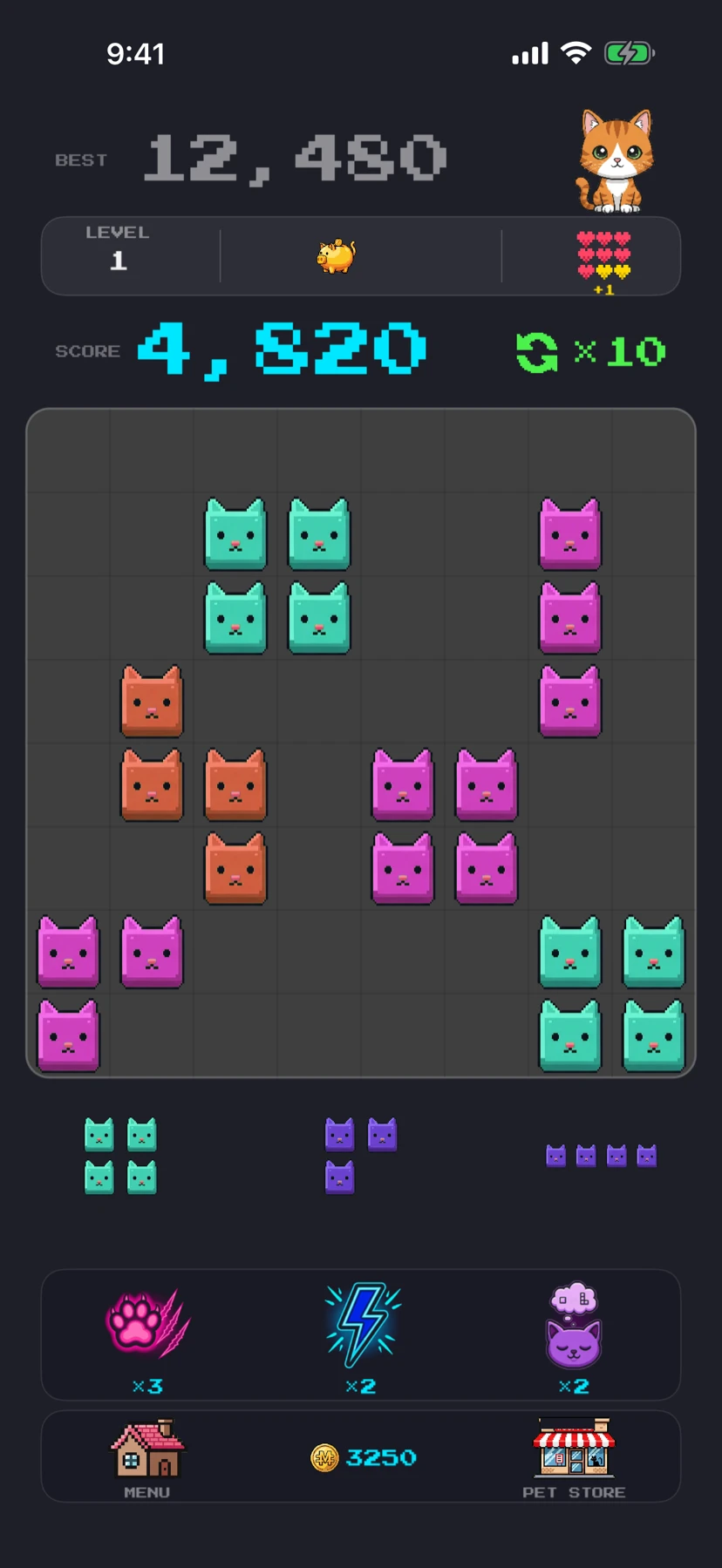
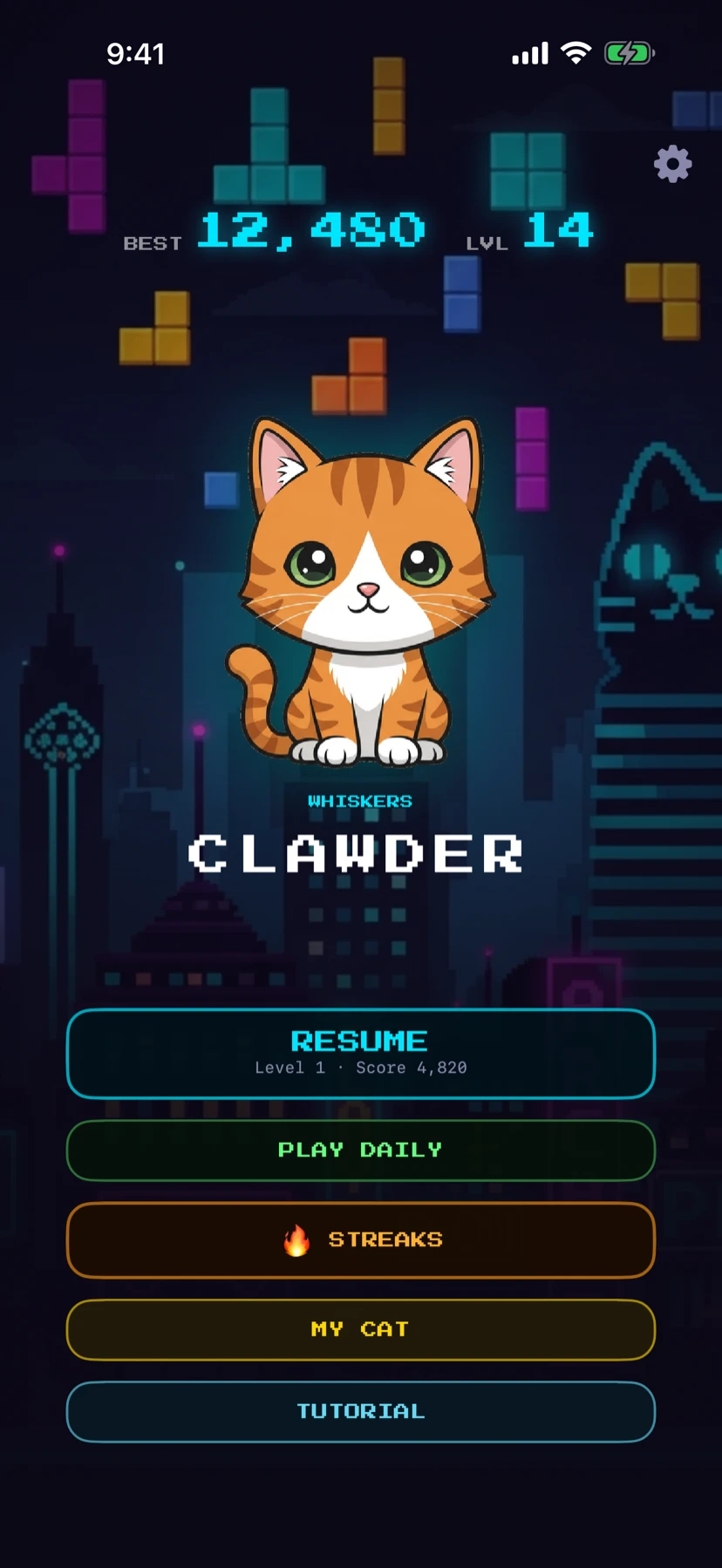
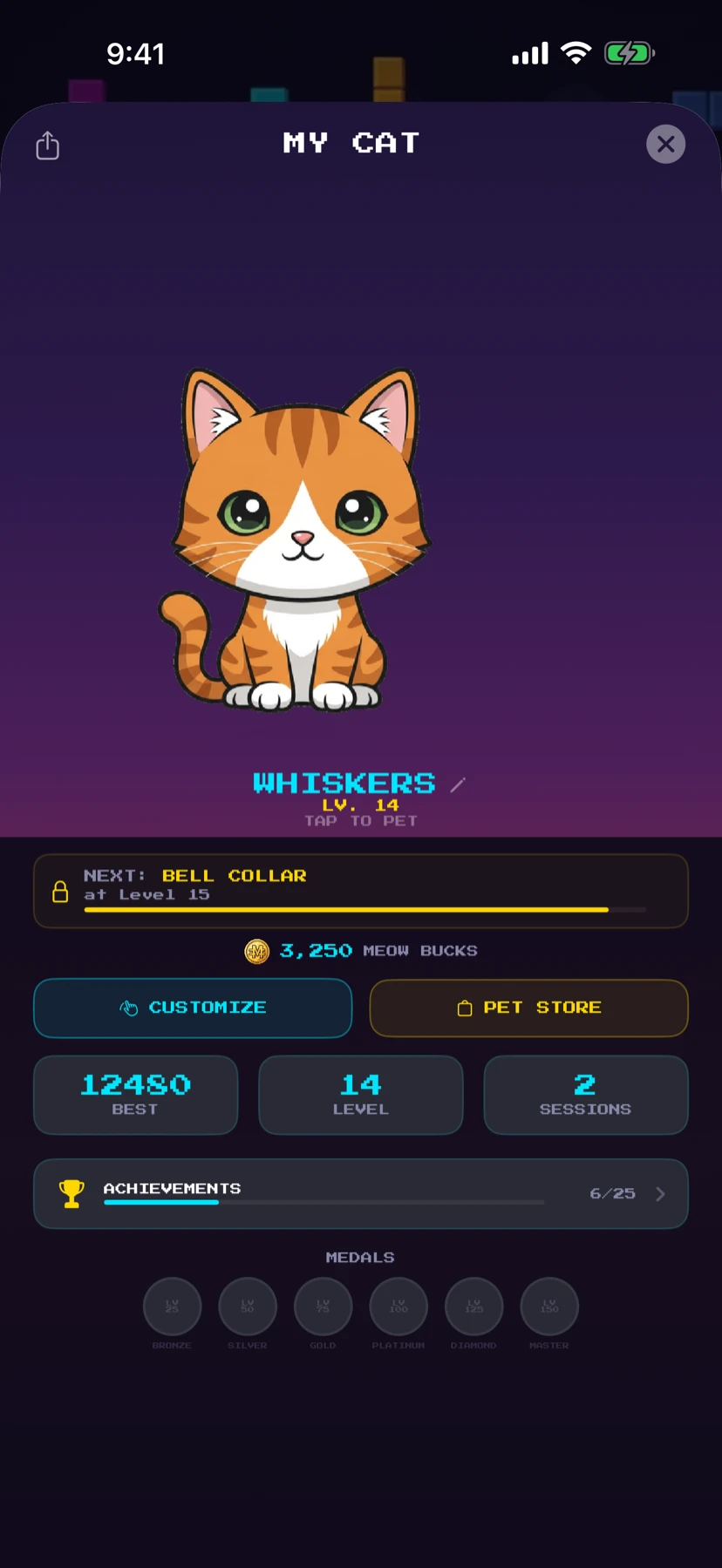
Drop the pieces. Clear the row. Let the cat judge you. No ads, no loot boxes — just the puzzle and the cat.
REAL SCREEN
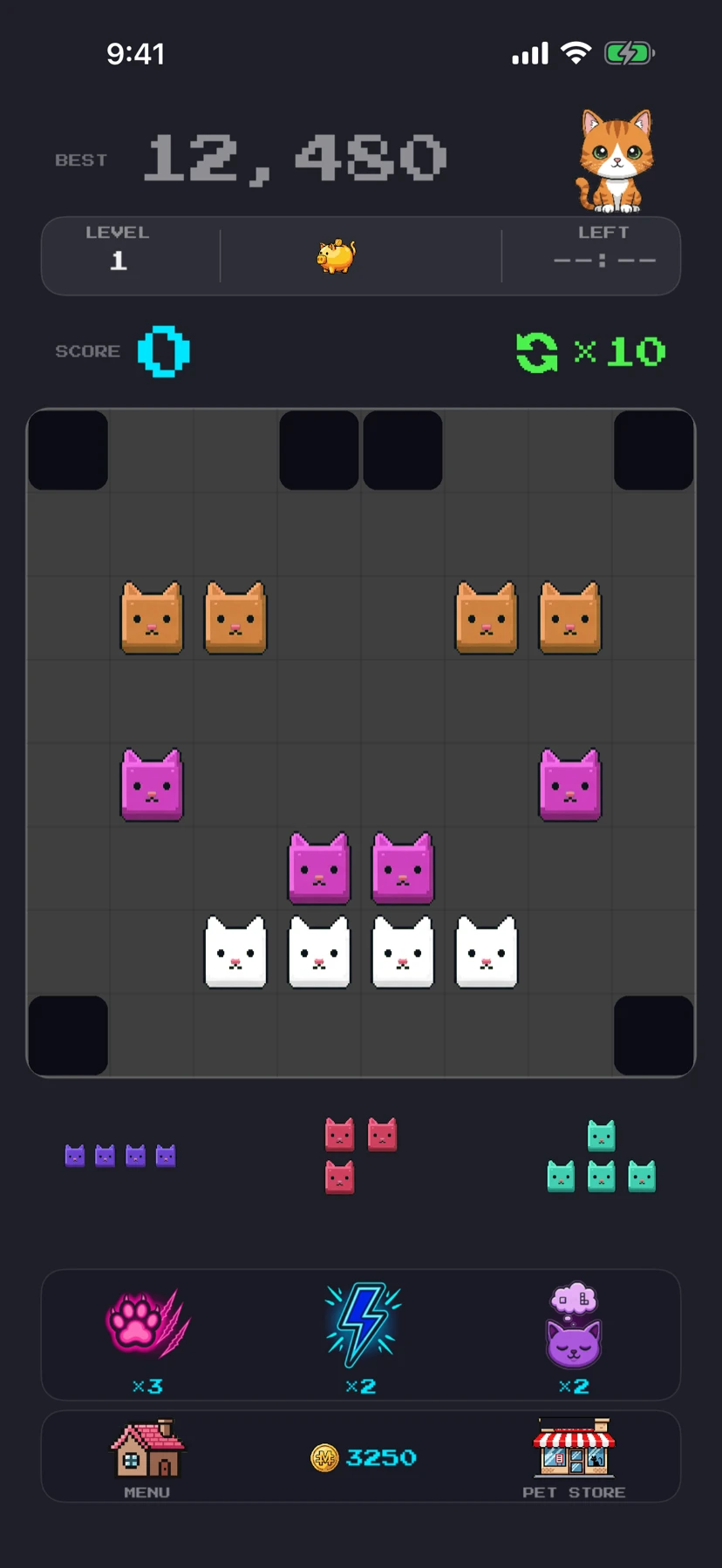
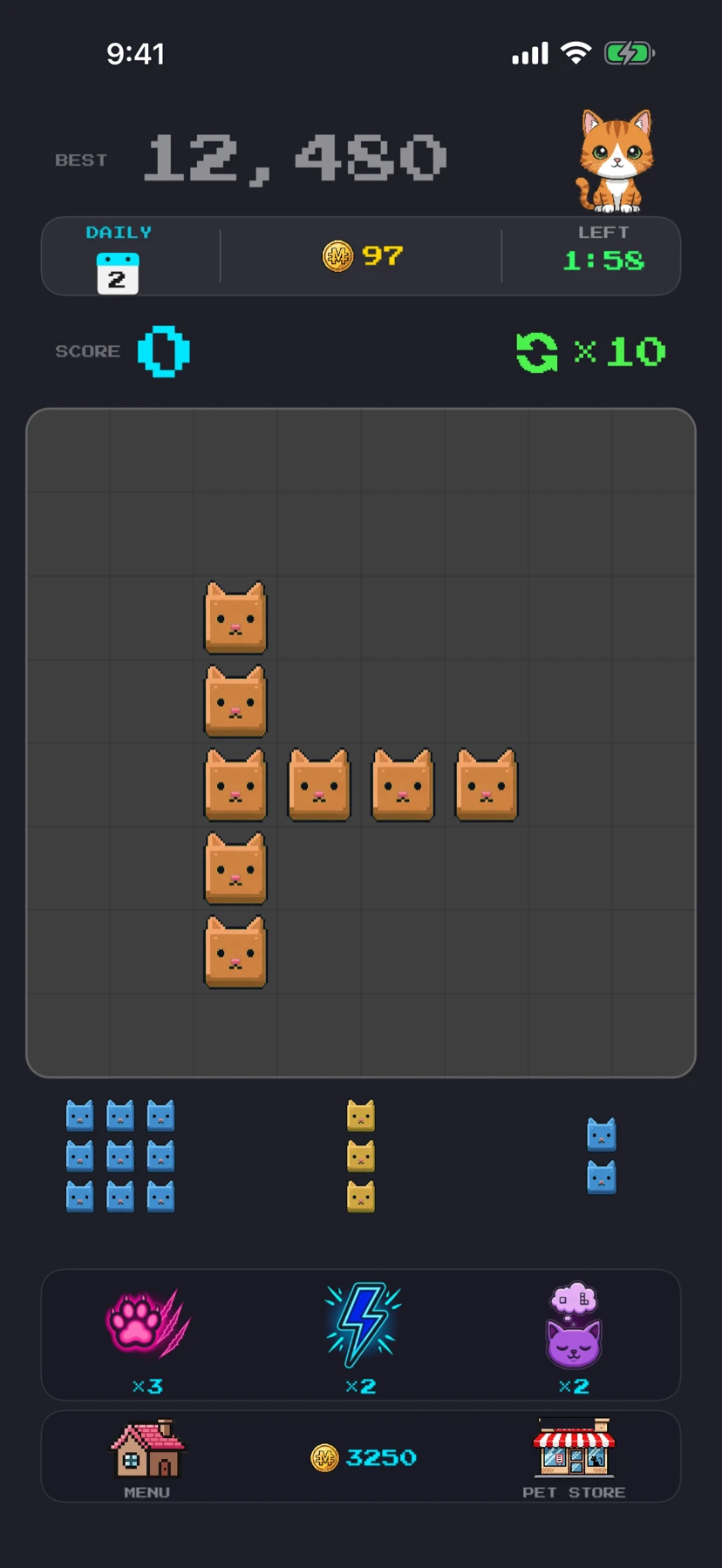
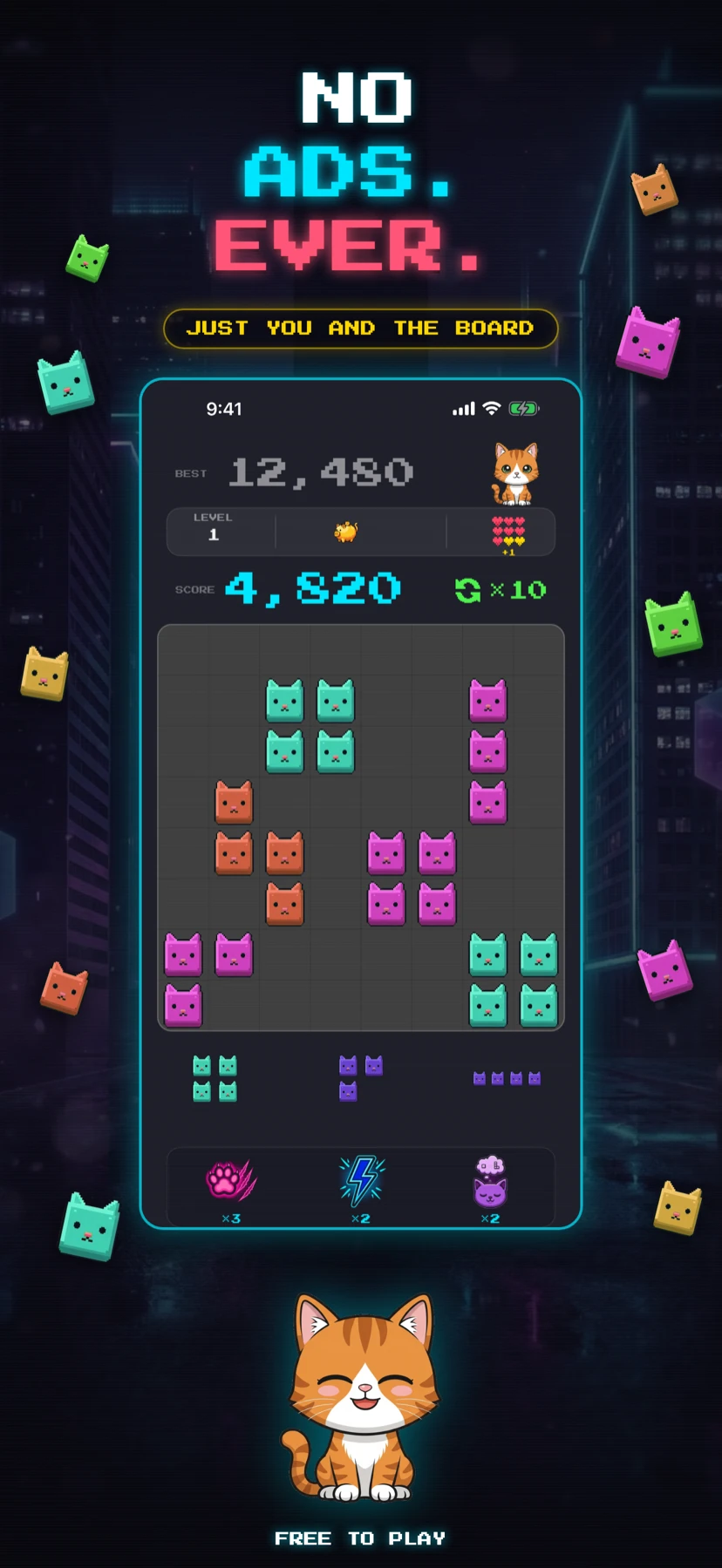
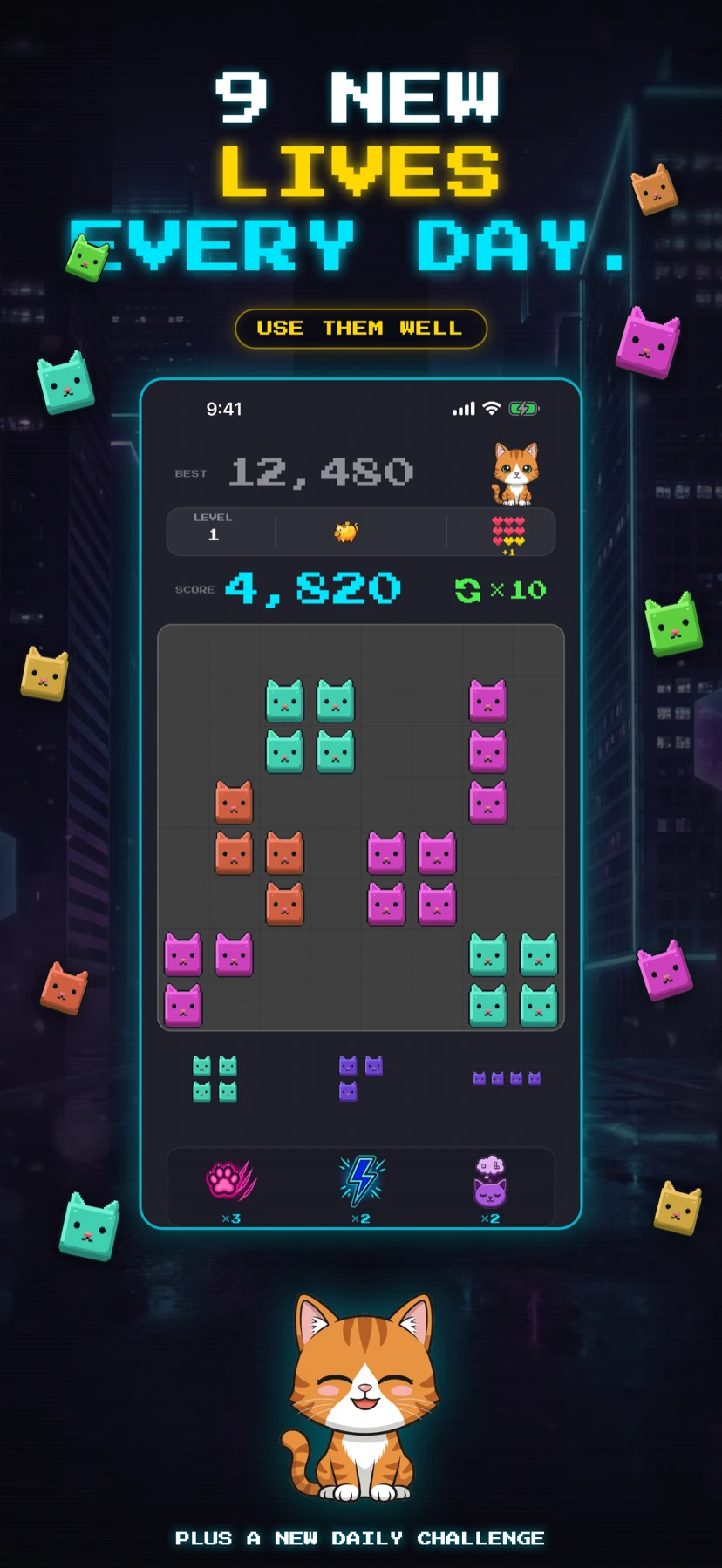
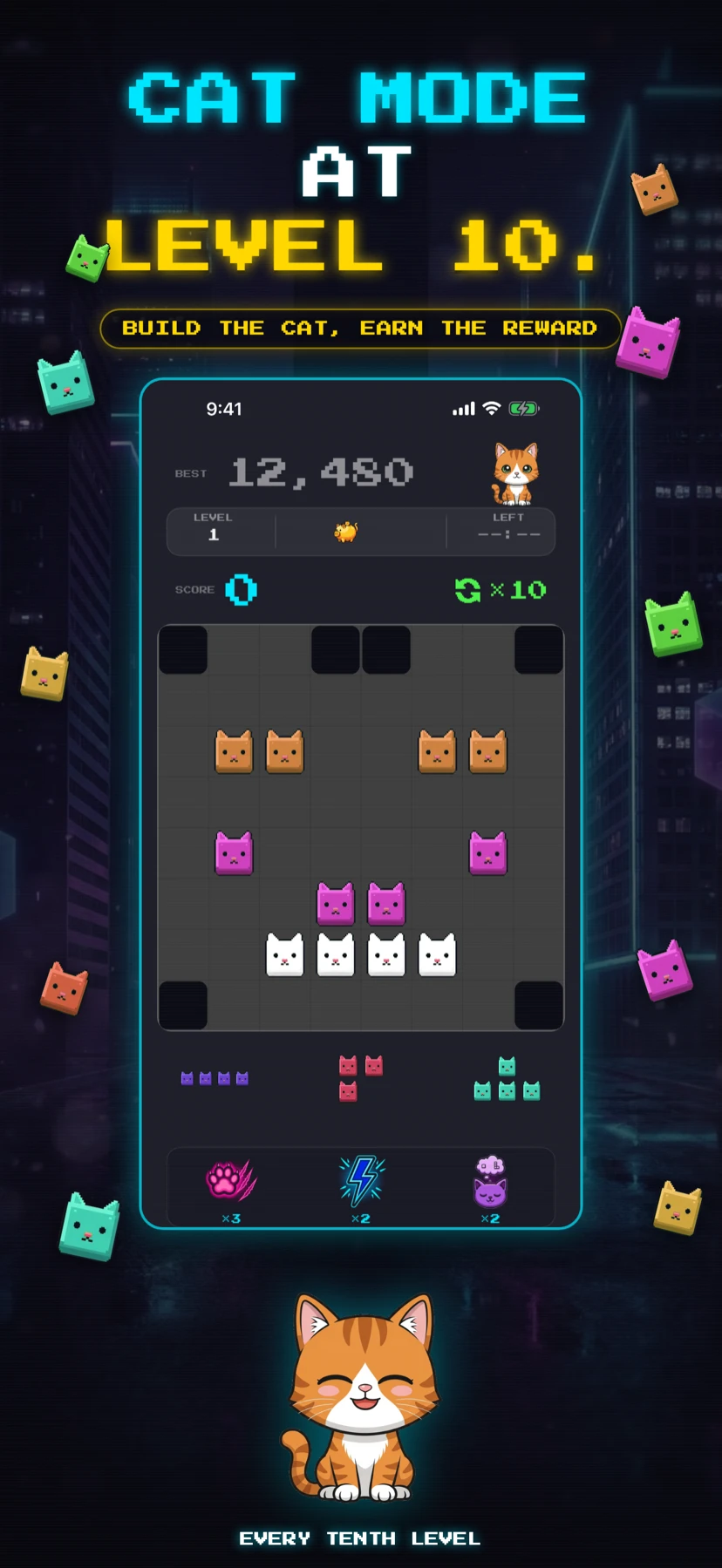
CLAWDER is a cozy cat puzzle: drag pieces onto the grid, fill rows and columns to clear them, keep the board alive as long as your nerve holds. One finger, one quiet loop, an escalating number of cats with opinions.
It's the kind of game you play on the commute, over lunch, or in bed avoiding sleep. Easy to pick up. Harder to put down — which is the only kind of "hard to put down" we're willing to engineer, because nothing in here is designed to keep you. You stay because the pieces landing right feels good, or you don't. The cat is fine either way. (It isn't, but it'll pretend.)

We wrote those down before we wrote the game, and they're not going anywhere.
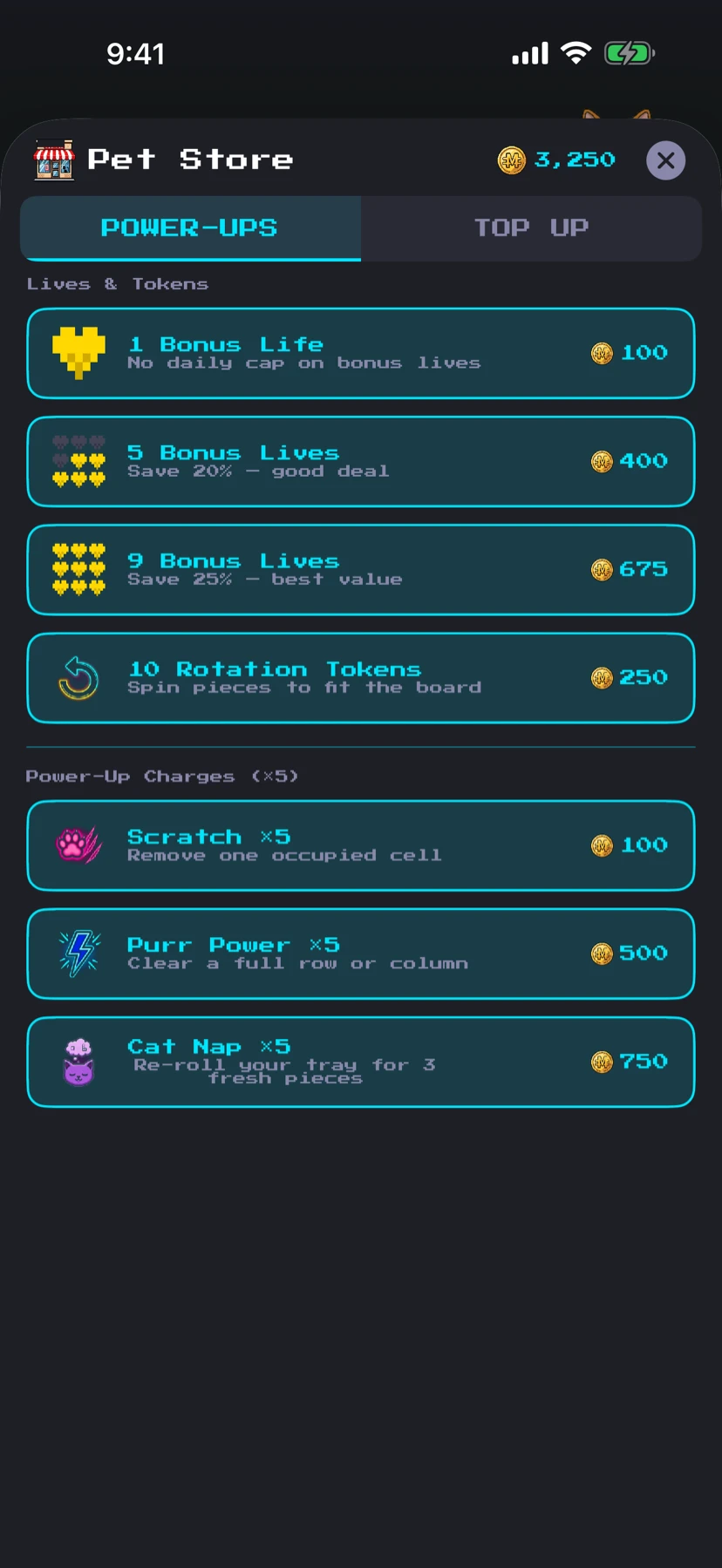
No thirty-second video before you can keep playing. No loot box dressed up as a surprise. CLAWDER gives you nine new lives every day, and the optional things you can buy (cosmetics, a shortcut, a few extra lives) are exactly that: optional.
→ Why CLAWDER has no ads (and never will)Four rules, written down before the game was built. Anyone can print rules on a page — so here's each one with the thing we actually built to make it hold.
There is no advertising SDK in CLAWDER. Not switched off, not “rewarded only” — absent. Nothing in the shipped app has a code path that can show you an ad, so there is nothing here to switch on later — putting ads in CLAWDER would mean shipping a different app, not flipping a flag. Our privacy policy lists every outside service the app touches; there is no ad network on that list.
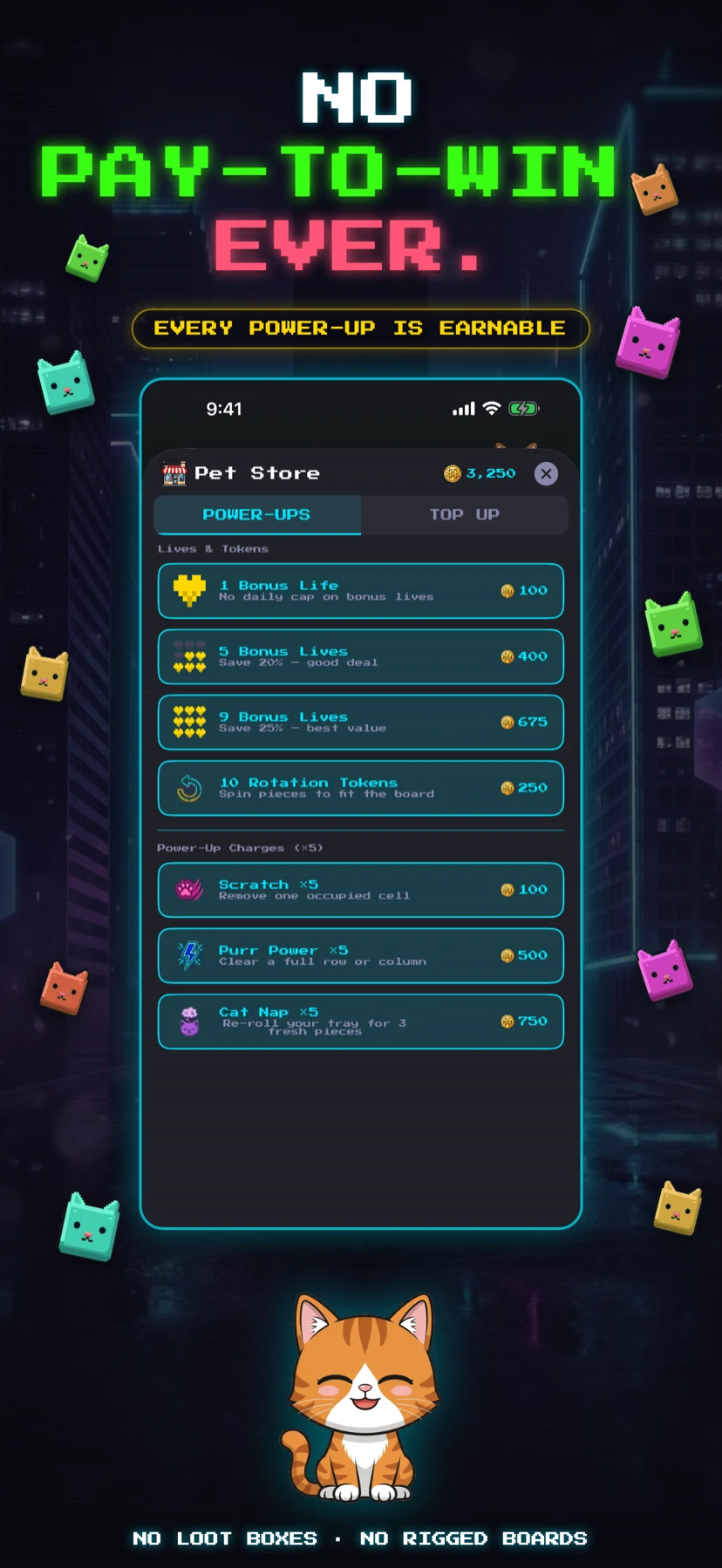
Every purchase names exactly what you get before you buy it. Nothing is randomized, so there are no odds to disclose, no crates, no pulls, and no chance for the thing you wanted to not arrive. If you spend, you know precisely what for.
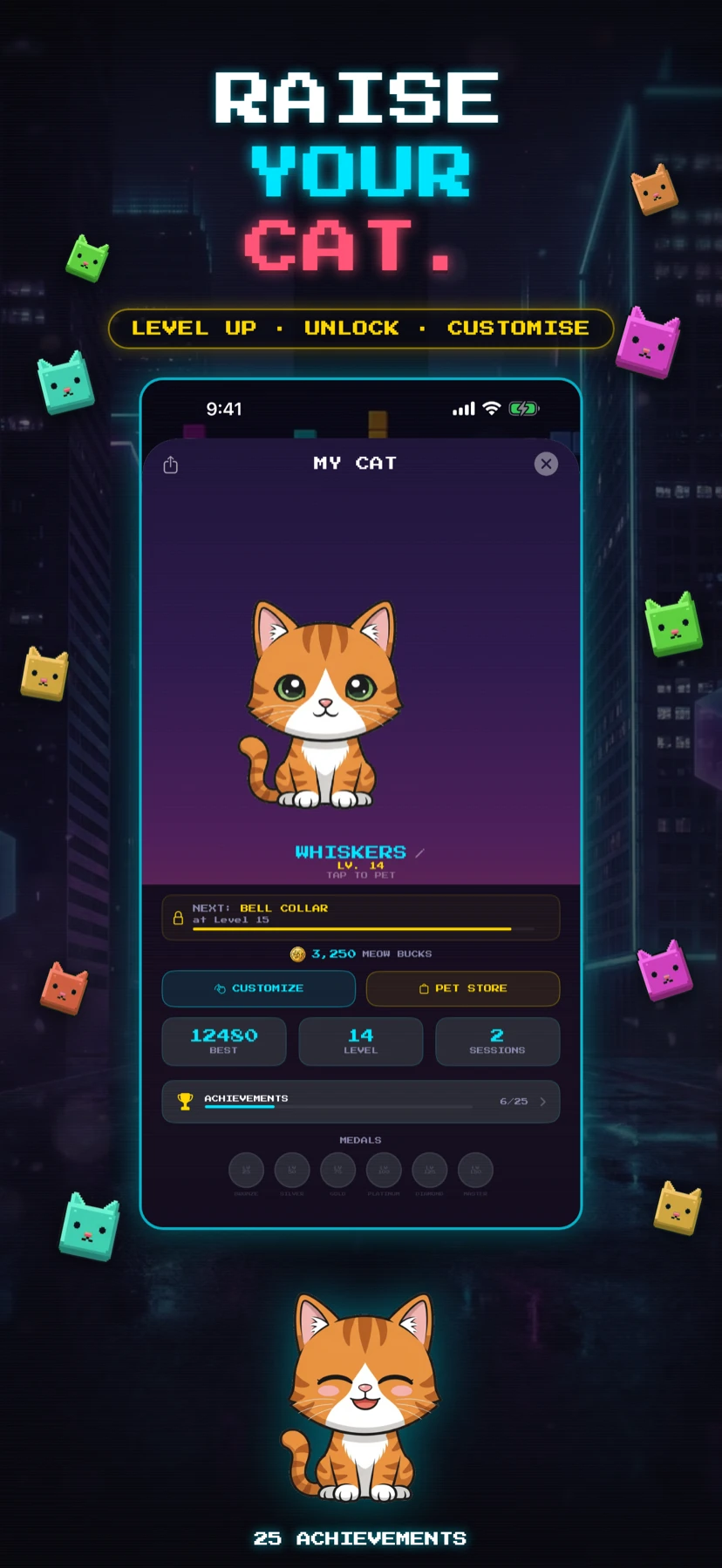
A real amount of play, every day. Meow Bucks, the in-game currency, are earned through play and can also be bought by players who would rather skip the grind. Cosmetics, a shortcut, a few extra lives — optional, and named before you buy.
The piece generator is seeded and deterministic — the same seed deals the same pieces, which is how everyone playing a given daily challenge gets an identical board. Difficulty follows your level, and it does rise as you climb — that's the game getting harder, not the game getting cynical. It is one curve, identical for every player at the same level, and your level is the only thing that moves it. The game does read your board when it refills your tray, but only to check you aren't being handed pieces you can't place anywhere; that check exists to help you. It never reads your balance or your purchase history — that information isn't available to the generator at all.
KissyKat Games is one person who likes cats and clean lines. The cats are designed by the same person who builds the game. No growth team, no monetization team — which is precisely why there's nobody here whose job is to interrupt you.