CLAWDER is a cozy puzzle that's mostly cats. Drag pieces onto the grid, fill a line — across or down — to clear it, and keep the board alive as long as you can. The score takes care of itself once you stop losing, and you stop losing by keeping room to move. Here's how the better runs happen.
Because the game only ends when you run out of space for the next piece, a high score is mostly about keeping room on the board. Every tip below is a different way of saying don't run out of room.
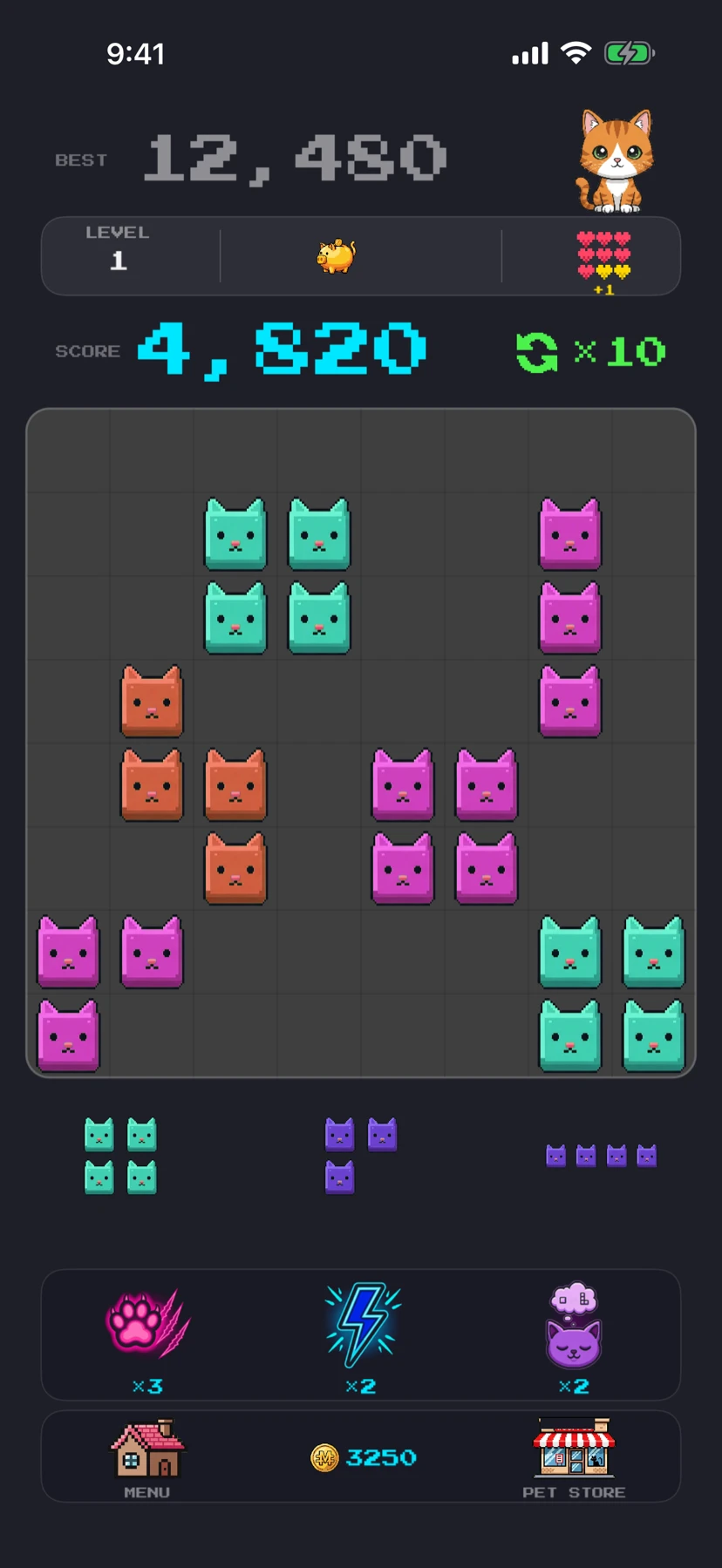
1. Leave yourself space — especially the corners
The fastest way to lose is to fill the edges early and strand a big piece with nowhere to go. Keep an open region. Treat the middle as working space and the corners as a last resort, not a first one. A board with a hole in it is a board you can still play.
2. Clear more than one line at a time
A single line clear is fine. Two or three at once is where the score actually moves — and where the board opens back up the most. Before you place a piece, look for the spot that completes two lines instead of one. Patience here pays more than speed.
3. Read the whole tray before you touch a piece
You're given a set of pieces, not one. Plan the order. The piece you place first decides whether the next two fit at all — so look at all of them, find the one that's hardest to place, and make room for that one first.
4. The pressure is the space you have left — so think
The pressure in the core puzzle is the space you have left on the 8×8 grid. Sit on a move. Count the squares. (If you want a clock, that's what the Daily Challenge and the higher levels are for.)
5. Power-ups are a rescue, not a routine
CLAWDER has a few — Scratch, Purr Power, Cat Nap — and they're for the board you've painted yourself into a corner on, not for every turn. You get charges through gameplay, and you can also recharge them with Meow Bucks. Spend them when they actually save a run, not out of boredom. A power-up used to escape a real jam is worth three used because you had one.
6. Use the Daily Challenge as practice
It's a fresh board every day and a low-stakes place to try the habits above without torching your best run. Streaks are their own reward, and the muscle memory carries straight back into the main game.
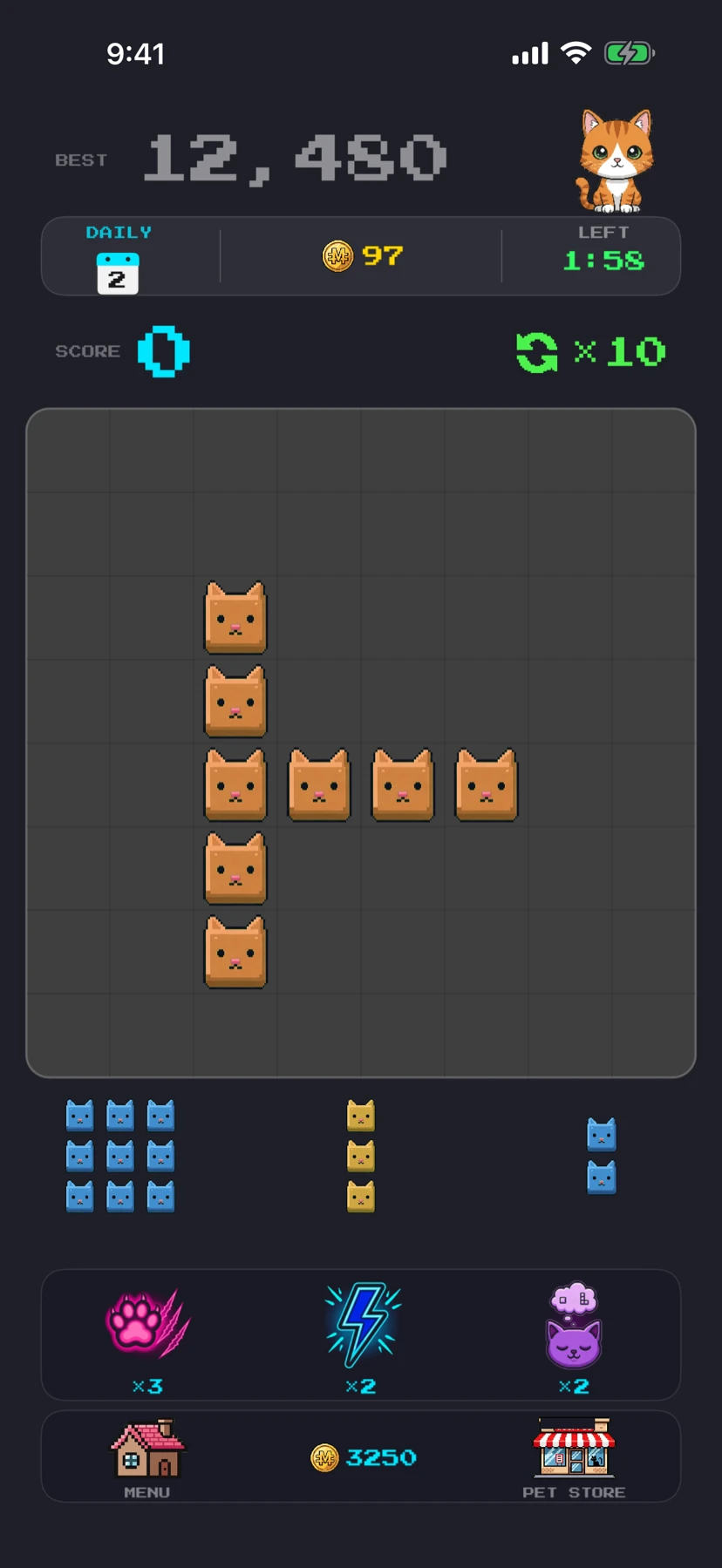
That's the whole method: keep room, stack your clears, look before you leap, and save the cats for when you need them. Do that and the high score arrives on its own.
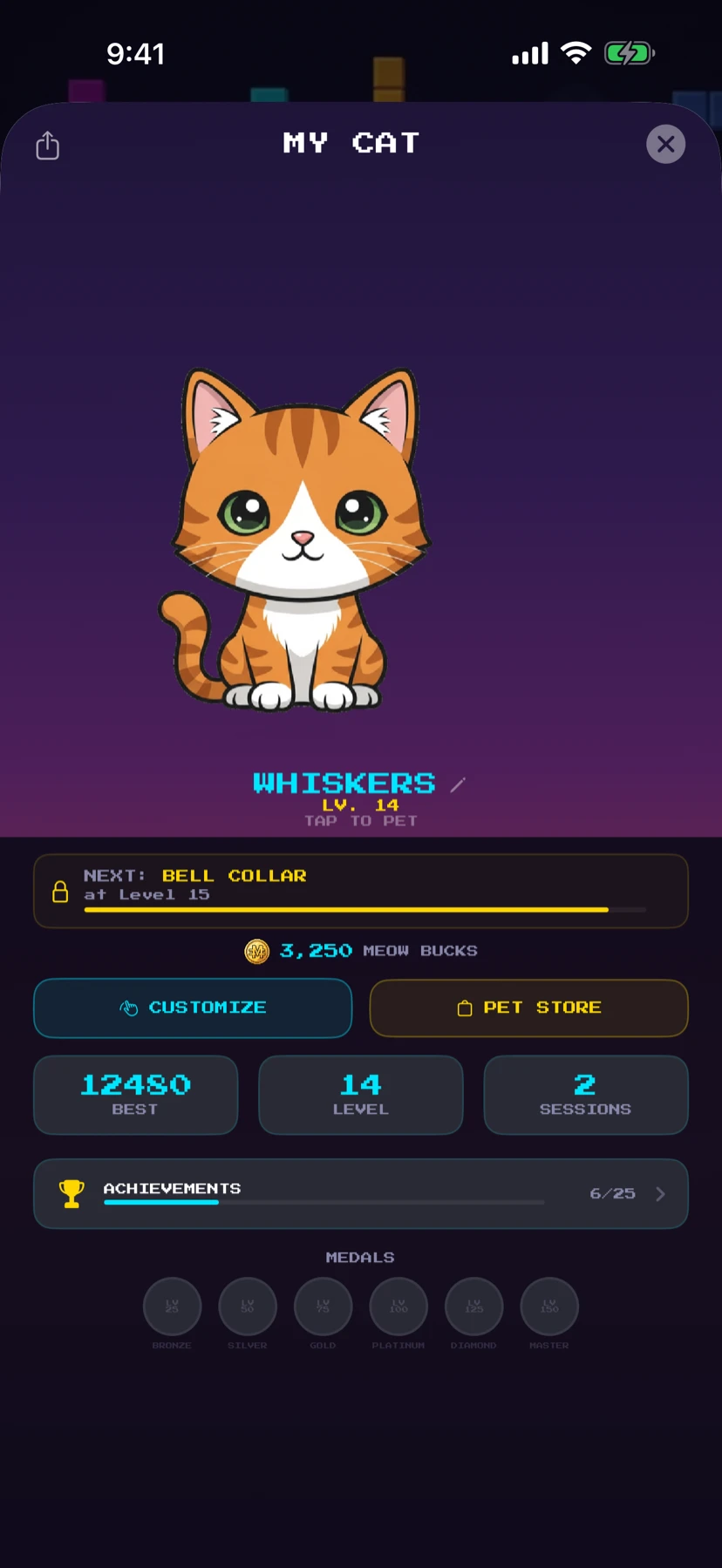
The leaderboard's right there when you're ready. So is the cat, who has already seen your score and elected not to comment.
More about CLAWDER → · Why there are no ads (ever) → · FAQ → · Wiki →